The building
Palau history and design
Who built the Palau de la Música Catalana, why, and what to look for in the hall: the skylight, the muses, the façade and the UNESCO listing.
Reserve a seat at the Palau ↗Quick answer
The Palau de la Música Catalana was built between 1905 and 1908 by Lluís Domènech i Montaner as the headquarters of the Orfeó Català, a choral society, and was funded by public subscription. It is a masterpiece of Catalan modernism, and the Palau says it is the only concert hall declared a UNESCO World Heritage Site, on 4 December 1997.
A choir's headquarters
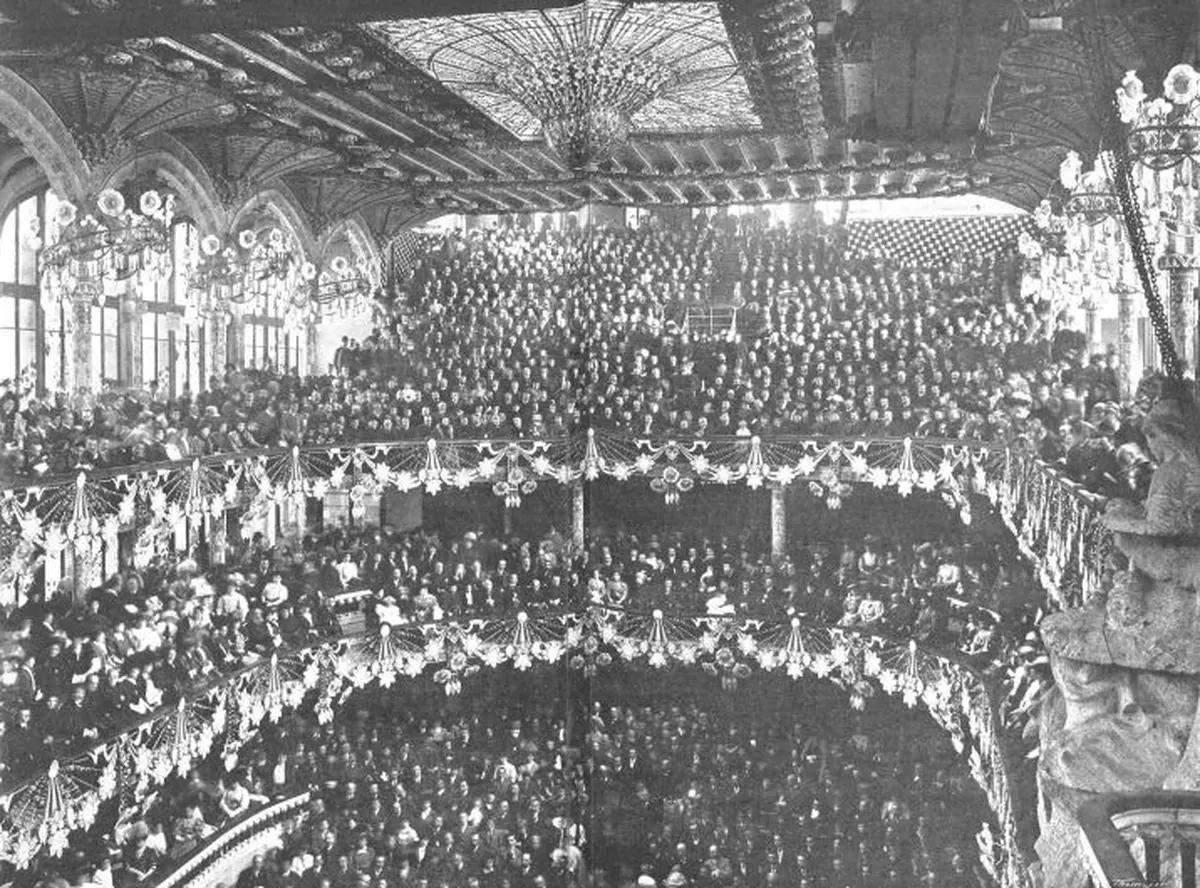
The Orfeó Català, founded in 1891 by Lluís Millet and Amadeu Vives, was a leading force of the Renaixença, the Catalan cultural revival. The society needed a home, and the Palau was commissioned in 1904 and built between 1905 and 1908. Public subscription paid for it, and wealthy Barcelona patrons gave money too. The building opened in February 1908, and the city's council gave the architect its prize for the best building of the year in 1909.
The architect
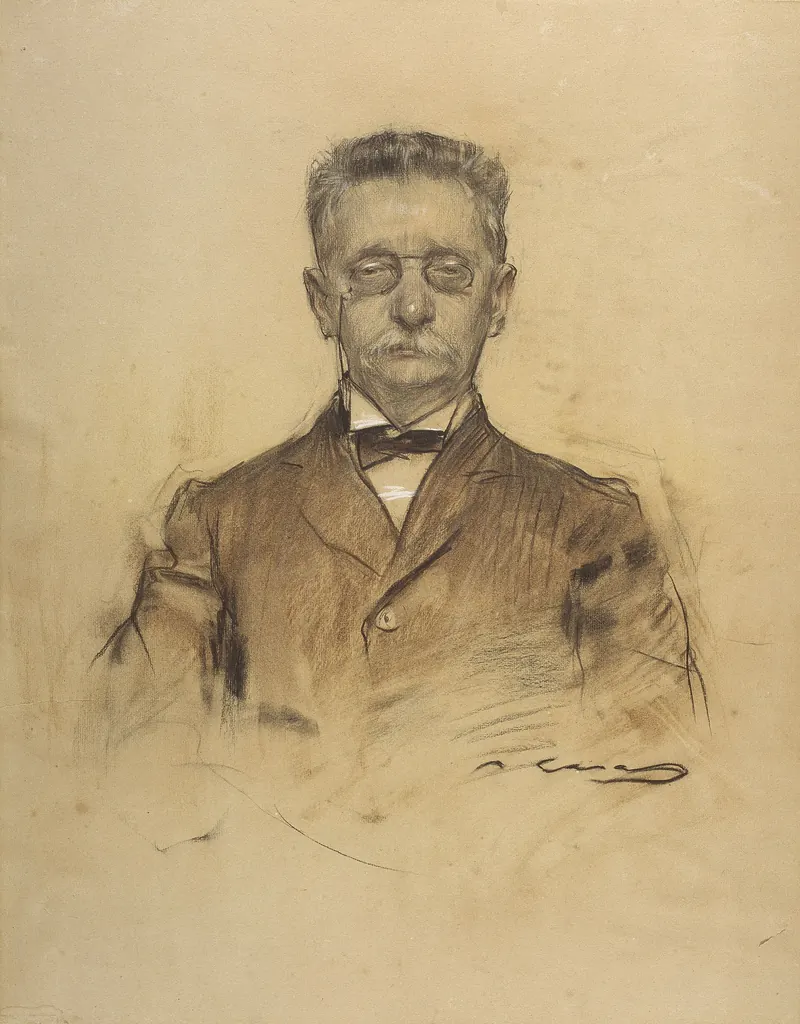
Lluís Domènech i Montaner was an architect and a politician, and a leading voice of Catalan Modernisme, the local form of Art Nouveau. The Palau says he worked closely with ceramists, sculptors, stained-glass artists and other craftspeople, so that the building became a synthesis of the arts. Wikipedia adds that patrons asked for materials and techniques that reflected Catalan identity, and that he gave local craftsmen creative freedom.
Rational structure, rich surface
Wikipedia notes that the design is rational as well as ornate. A steel frame and brick carry the building, and the walls were an early example of curtain-wall structure, which is why so much glass can sit in them. Curves beat straight lines, and floral and organic motifs run throughout. The Palau sits in the old quarter of Sant Pere, not in the 19th-century Eixample, where most of Barcelona's other modernista landmarks stand.
The street front
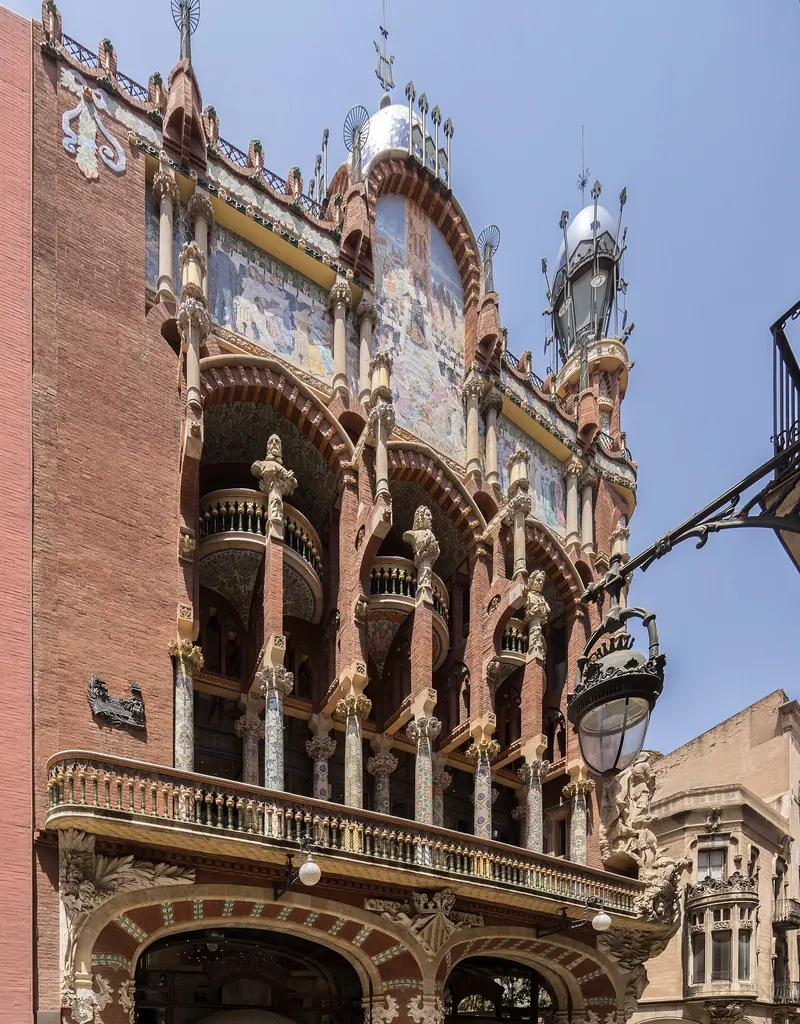
The façade on Carrer de Sant Pere Més Alt was the original entrance until 1989. At the corner stands the sculptural group La cançó popular catalana by Miquel Blay, a Saint George beneath a central female figure symbolising music. A balcony runs along the front, lined with paired columns covered in mosaic, each in a different design. Busts of Palestrina, Bach and Beethoven stand above, and a mosaic pediment by Lluís Bru crowns the whole.
The concert hall
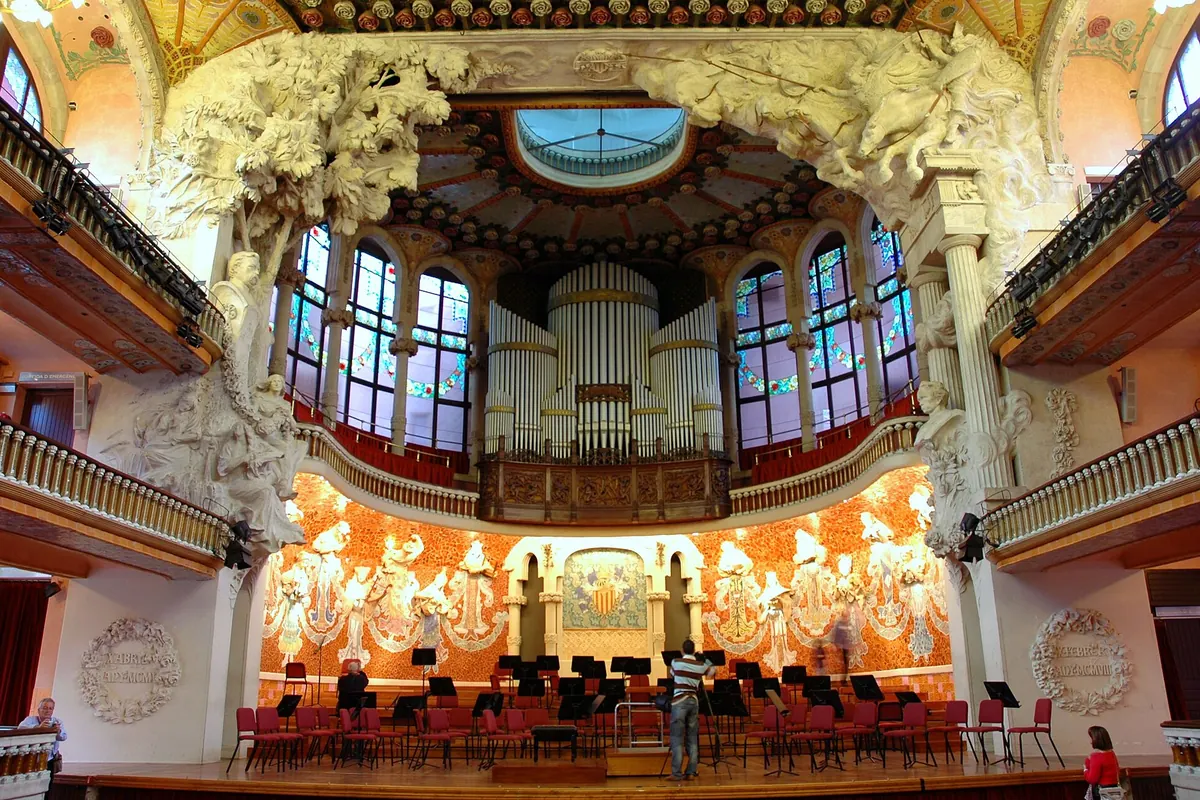
The concert hall is the draw. The Palau describes it as crowned by a central skylight representing the sun, with the organ presiding over the stage and natural light filling the room. Muses surround the stage, Wagner's Valkyries emerge from the ceiling, and busts of Anselm Clavé and Beethoven stand in the hall. Wikipedia credits the skylight to Antoni Rigalt, with an inverted dome in gold surrounded by blue.
UNESCO and the restoration
UNESCO declared the Palau a World Heritage Site on 4 December 1997, together with the Hospital de Sant Pau, another Domènech i Montaner work. The Palau says it is the only concert hall to have the designation. Wikipedia records a restoration and extension between 1982 and 1989 by Oscar Tusquets and Carles Díaz, and a smaller hall, the Petit Palau, opened in 2004. The Palau today runs visits as well as concerts.
How to see it
There are two ways in. A concert puts you in the hall for an evening, and the Palau's visit tickets walk you through the foyer, the staircase, the Lluís Millet hall and the concert hall by day. The Palau says visits and concerts are separate tickets. The guitar trio concert on this site is a concert ticket, and a visit is a different booking. See the other guide for the choice between them.
Read next: Palau tour or concert?
Frequently asked questions
Who designed the Palau?
Lluís Domènech i Montaner, a leading figure of Catalan Modernisme. He built it between 1905 and 1908 for the Orfeó Català.
When did UNESCO list it?
On 4 December 1997, according to the Palau. It was listed together with the Hospital de Sant Pau.
What is the skylight?
A central stained-glass skylight in the concert hall that represents the sun, in gold surrounded by blue, designed by Antoni Rigalt.
Is the building only for concerts?
No. The Palau also runs visits, and the building has a foyer café, a shop and a small second hall called the Petit Palau.
Sources